
If you are planning a bathroom remodel in Massachusetts, the first question is almost always the same: what is this going to cost? It is a fair question, and a hard one to answer with a single number, because two bathrooms of the same size can land thousands of dollars apart depending on the finishes, the layout, and how much plumbing has to move.
This 2026 guide breaks down realistic price ranges for the Greater Boston area, from a simple refresh to a full high-end renovation. Every figure here is a market range, not a quote. The only way to get an accurate price for your home is a walkthrough and a written estimate. At New Power Construction in Malden, MA, that estimate is free, and we will walk you through exactly what is driving your number.
The Short Answer: Typical 2026 Price Ranges
As a rough guide for the Greater Boston market in 2026, most bathroom remodels fall into three bands. A small or standard bathroom refresh (new vanity, toilet, fixtures, fresh tile in a same-footprint tub or shower) typically runs somewhere in the range of $12,000 to $22,000. A mid-range remodel with better materials, a tiled shower, and some layout tweaks commonly lands between $22,000 and $40,000.
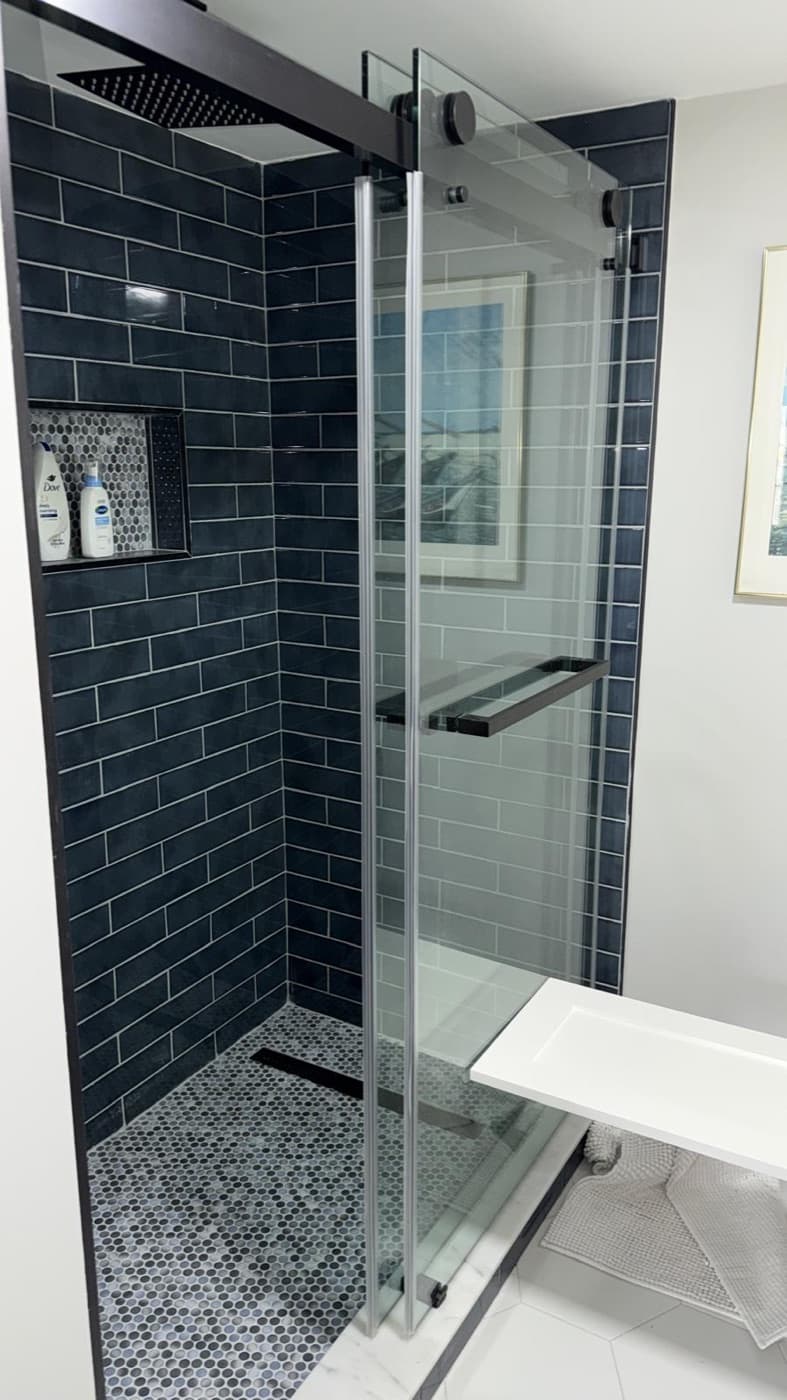
A high-end or full primary bathroom renovation, think large-format tile, a custom glass walk-in shower, a double vanity, heated floors, and moved plumbing, often runs $40,000 to $75,000 or more. Costs in eastern Massachusetts tend to sit above the national average because of labor rates, permit requirements, and the age of the housing stock. These numbers assume a licensed, insured contractor doing the work to code, not a patch job.
What Actually Drives the Price
The size of the room matters less than most people expect. What really moves the budget is the finishes you choose and how much of the existing bathroom you keep. A remodel that reuses the current layout and plumbing locations will always cost less than one that reshapes the room.
Tile is one of the biggest swing factors. Basic ceramic wall tile is affordable, but porcelain, natural stone, mosaic accents, and large-format slabs raise both material and labor cost, because they take longer to set and cut. A fully tiled shower with a niche and a bench costs far more than a prefab surround. The same logic applies to the vanity: a stock vanity is budget-friendly, while a custom cabinet with a stone top is a premium line item.
Plumbing and Electrical: The Hidden Cost Multiplier
Moving plumbing is the single fastest way to grow a bathroom budget. If you keep the toilet, sink, and shower roughly where they are, you avoid opening walls and floors to reroute supply and drain lines. Relocating any of those fixtures means new rough plumbing, patched framing, and often a bigger permit, which can add several thousand dollars.
Electrical work adds up too. Older Massachusetts homes frequently need updated wiring, GFCI outlets, a proper exhaust fan, and new lighting to meet current code. If you want heated floors, a fog-free mirror, or extra circuits, budget for a licensed electrician. These upgrades are worth it, but they are easy to underestimate when you are only picturing the tile and paint.
Tub vs. Walk-In Shower: How the Choice Affects Cost
One of the most common decisions homeowners face is whether to keep a tub or switch to a walk-in shower. A straightforward tub-to-shower conversion in the same space is usually one of the more cost-effective upgrades, especially with a prefab base and a glass panel.
A custom tiled walk-in shower with a frameless glass enclosure sits at the higher end, because of the waterproofing, the tile labor, and the custom glass. If you want to keep a soaking tub as a separate feature alongside a shower, you are effectively building two wet areas, which pushes the project toward the top of the range. There is no wrong answer here, but each option carries a different price tag, and a good contractor will lay that out before you commit.
Labor, Permits, and Why Massachusetts Runs Higher
Labor is typically the largest slice of any bathroom remodel, often 40 to 60 percent of the total. In the Greater Boston area, skilled trades command higher rates than in much of the country, and quality finish work is where the money goes and where the result shows.
Permits are part of the picture too. Most towns in Massachusetts, including Malden and Medford, require building, plumbing, and electrical permits for a full remodel, and inspections at key stages. A licensed contractor pulls those permits and schedules the inspections so the work is documented and up to code. Skipping permits to save money is a false economy: it can create problems when you sell the home and voids the protection that comes with permitted, inspected work.
Older Homes in Greater Boston: Expect a Few Surprises
Much of the housing around Malden, Medford, and the rest of Greater Boston was built decades ago, and older bathrooms tend to hide issues you only find once the walls are open. Water damage behind old tile, dated galvanized pipes, undersized wiring, or a subfloor that has softened over the years are all common finds.
This is why a realistic budget includes a contingency, often 10 to 15 percent, for the unexpected. A trustworthy contractor will flag the likely risks during the estimate and talk through how surprises get handled and priced, rather than springing a surprise bill on you mid-project. Transparency at the start is the best protection against a runaway budget.
How to Get an Accurate Number for Your Home
Online averages are a useful starting point, but they cannot account for your specific layout, your finishes, or what is hiding behind your walls. The only way to know what your remodel will cost is to have a contractor see the space, understand what you want, and put a written estimate together.
At New Power Construction, we are a family-run general contractor based in Malden, MA, serving Greater Boston, and estimates are free. Led by finish carpenter Reggie Torres with 20 years of experience, we handle bathroom remodels from a straightforward refresh to a full custom build, and we explain where every dollar goes. If you are weighing a project, reach out for a free estimate and a clear, honest price for your home.