
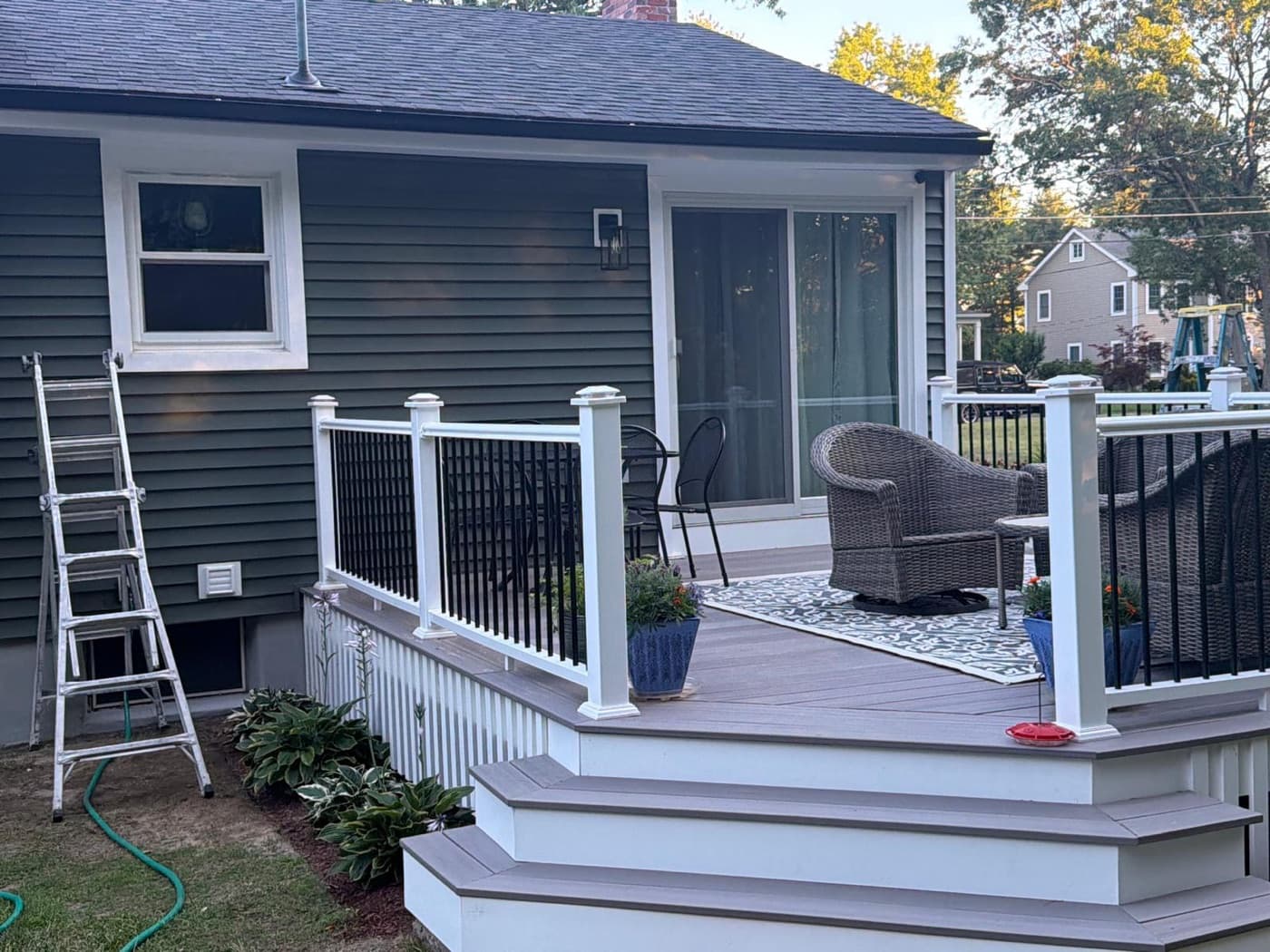
Choosing between composite and wood decking is one of the biggest decisions Greater Boston homeowners face when planning an outdoor space. Both materials can look great and last for years, but they behave very differently once New England weather goes to work on them.
Massachusetts puts decks through a lot. Humid summers, heavy autumn rain, snow load in winter, and the constant freeze-thaw cycle that comes with our temperature swings all take a toll. The right material for your home depends on your budget, how much upkeep you are willing to do, and how long you plan to stay.
This guide breaks down the real trade-offs between composite and pressure-treated wood so you can decide with clear eyes. We include realistic 2026 cost ranges, but every yard and design is different, so the best number always comes from a free on-site estimate.
Upfront Cost: Where Wood Wins Early
Wood is almost always cheaper to install up front. In the 2026 Massachusetts market, a pressure-treated pine deck typically runs somewhere in the range of 30 to 55 dollars per square foot installed, depending on height, framing, footings, and railing style. Cedar and other premium wood species usually land higher than that.
Composite decking usually costs more at the start. Installed composite boards from the major brands commonly fall in the range of 55 to 95 dollars per square foot, and capped or premium lines can push higher. The board itself is more expensive, and the hidden fastener systems many composite decks use add labor and material.
These are broad ranges, not quotes. The real price swings a lot based on the size of the deck, the number of stairs, whether you need new footings, railing choice, and how the existing structure is holding up. A raised second-story deck with multiple stair runs costs far more per square foot than a simple ground-level platform. The only way to get a number you can trust is a free estimate where someone measures the space and looks at your framing in person.
Maintenance: Composite Wins the Long Game
This is where the two materials separate the most. Wood needs regular care to survive New England conditions. Plan on cleaning it each year and re-staining or re-sealing every two to three years to keep water out and slow down splitting, cupping, and gray-out. Skip that upkeep and a wood deck ages fast in our climate.
Composite is close to hands-off. There is no staining or sealing. Most homeowners just wash it with soap and water a couple of times a year to keep dirt, pollen, and mildew off the surface. That is a real difference over a decade, both in weekend hours and in the ongoing cost of stain, sealer, and brushes.
If you dislike yard chores or travel often, the low upkeep of composite is a genuine quality-of-life upgrade. If you enjoy maintaining your home and want to spend less at the start, wood can still be a smart choice as long as you commit to the routine.
Lifespan in New England Weather
Massachusetts freeze-thaw cycles are hard on any deck. When water soaks into a surface, then freezes and expands overnight, it slowly pries the material apart. Wood is especially vulnerable to this. Moisture works into checks and around fasteners, freezes, and over the years causes splitting, warping, and loose boards. Well-maintained pressure-treated wood in our region often lasts around 15 to 20 years, sometimes longer, but only if it is sealed on schedule.
Composite handles freeze-thaw better because it absorbs very little water. Most quality capped composite carries manufacturer warranties in the 25 to 50 year range against rot, splitting, and fade, and it tends to hold up well through repeated Massachusetts winters. It will not rot the way wood can, though the substructure underneath still needs to be built and flashed correctly.
One note for towns like Reading and Wakefield where mature trees shade many yards: damp, shaded decks that stay wet longer favor composite, since constant moisture accelerates rot and mildew on wood.
Looks and Feel
Real wood has a warmth and grain that many homeowners love, and freshly stained cedar or pine is hard to beat for classic New England curb appeal. The trade-off is that wood only stays that way with upkeep. Left alone, it fades to gray and can look tired within a few seasons.
Composite has come a long way. Current boards offer deep multi-tone colors and embossed grain patterns that read as convincing wood from a normal viewing distance, and they hold that color year after year without fading much. On a hot, sunny day some darker composite colors can feel warmer underfoot than wood, so color choice matters if your deck gets full afternoon sun.
This one comes down to taste. If you want that authentic natural wood look and enjoy refreshing it, wood delivers. If you want a consistent finish that looks the same in year ten as it did on day one, composite is the safer bet.
Resale Value and Return
A deck is one of the better outdoor projects for resale in the Greater Boston market, since buyers here value usable outdoor living space. Both materials add appeal, but they send different signals to buyers.
Wood costs less to install, so the gap between what you spend and what you recover can be favorable, especially if the deck is newer and well maintained. The risk is that a tired, gray, splitting wood deck can actually work against you at showings, since buyers see a maintenance project waiting for them.
Composite tends to appeal to buyers who do not want future upkeep, and a clean composite deck with a transferable warranty can be a real selling point. It costs more up front, so the pure dollar return can be similar to wood, but the move-in-ready impression it gives often helps a home show better. If you plan to sell within a few years, either can work. If you plan to stay long term, composite's low maintenance is easier to enjoy day to day.
Which Material Fits Which Homeowner
Choose wood if your budget is tighter up front, you genuinely do not mind annual cleaning and periodic staining, or you want that authentic natural grain look. It is also a reasonable pick for a deck you expect to rebuild or move away from within a decade.
Choose composite if you want to spend as little time as possible on maintenance, you plan to stay in the home for many years, your deck sits in a shaded or damp part of the yard, or you want a finish that looks consistent for decades through New England winters. The higher upfront cost buys you time back and better long-term durability.
There is no single right answer. Many Greater Boston homeowners land on composite for the low upkeep, while others stick with wood for the price and the look. The best move is to walk your yard with a contractor who knows local conditions, so the recommendation fits your home, your budget, and how you actually use the space.