
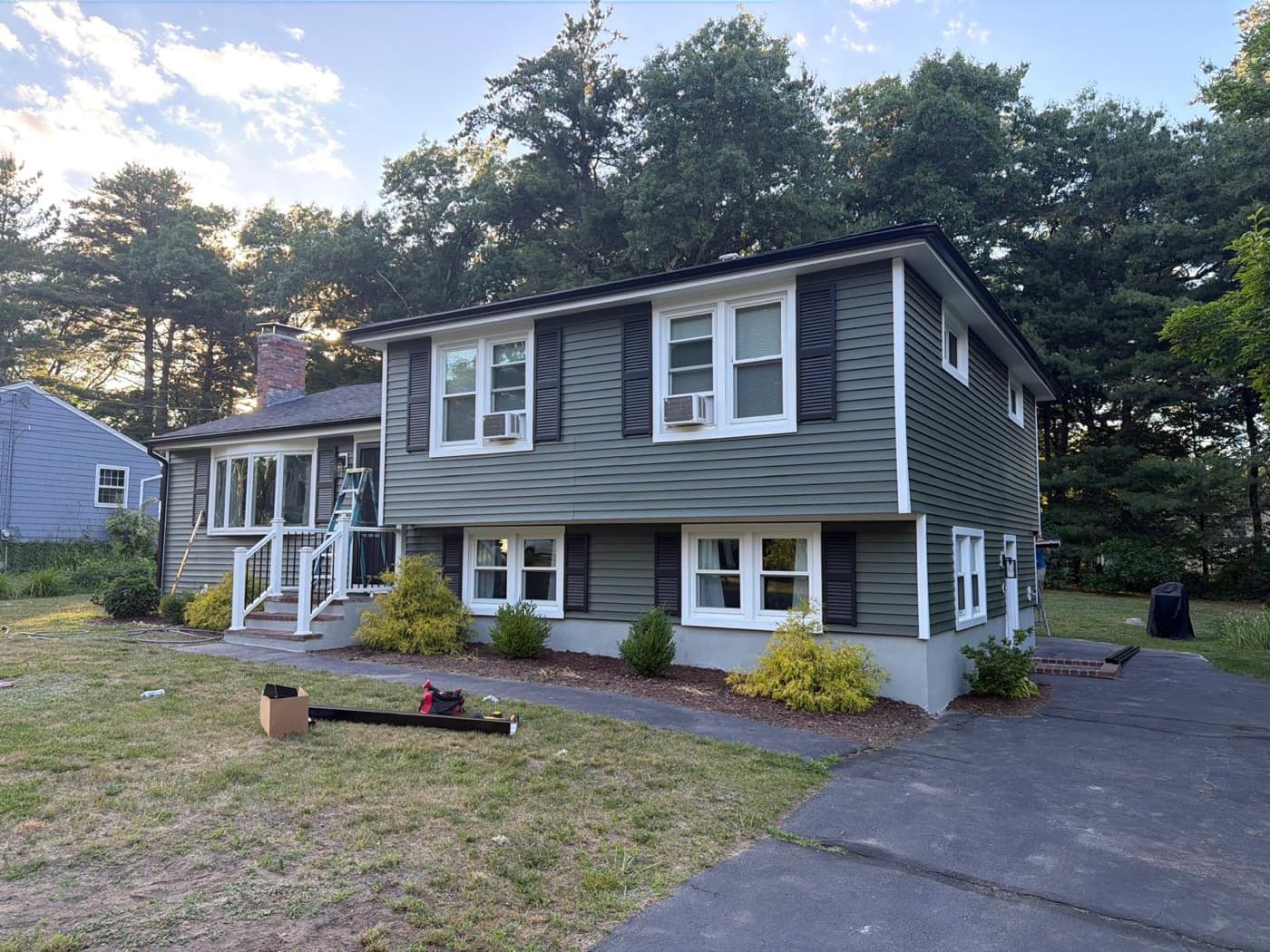
Your siding is the first line of defense between your home and everything New England throws at it: driving snow, ice dams, wind-driven rain, and the freeze-and-thaw cycle that repeats all winter long. When it starts to fail, the damage rarely stays on the surface. Water finds its way behind the panels, and small problems quietly turn into rot, mold, and higher heating bills.
The tricky part is that siding usually wears out slowly. By the time the signs are obvious from the street, moisture may already be working on the sheathing underneath. Catching the warning signs early is what saves Greater Boston homeowners from a much bigger repair down the road.
Below are the seven clearest signs your home needs new siding, why each one matters in the Massachusetts climate, and what to do once you spot them. If any of these sound familiar, a professional look will tell you whether you need a repair or a full replacement.
1. Cracks, Warping, or Buckling Panels
Siding is built to sit flat and tight against your home. When panels start to crack, warp, bow out, or buckle, that flat barrier is broken, and water has a way in. In Massachusetts, the freeze-and-thaw cycle is the usual culprit: moisture gets behind a small crack, freezes, expands, and widens the gap a little more with every cold snap.
Walk the perimeter of your house on a bright day and look across the surface at an angle. Waviness, gaps at the seams, or panels pulling away from the wall are all red flags. A crack here or there might be a repair. Widespread warping usually means the material has reached the end of its life and it is time to talk about replacement.
2. Rot, Soft Spots, or Crumbling Material
Rot is the sign you cannot ignore. Press gently on wood or fiber siding in a few spots, especially low on the walls and near the ground where splashback collects. If the material feels soft, spongy, or crumbles, moisture has gotten in and is breaking it down from the inside.
Pay close attention to corners, seams, and anywhere near the roofline where ice dams form. These are the spots that take the most abuse during a New England winter. Once rot spreads to the sheathing behind the siding, a quick patch will not fix it. This is one of the strongest signals that a full replacement is the safer, smarter call.
3. Rising Energy Bills
Siding does more than look good. Paired with the insulation and house wrap behind it, it helps keep conditioned air inside. When siding fails, it lets drafts in and lets your heating and cooling escape, and you feel that on your utility bill.
If your heating costs have crept up over the last few winters without an obvious reason like a rate hike, aging or damaged siding could be part of the story. Homeowners in Medford and Arlington often notice the difference most in the coldest months, when a drafty exterior forces the furnace to work overtime. New siding with a proper weather barrier can help tighten the envelope and make the house more comfortable and efficient.
4. Peeling Paint or Wallpaper Inside the House
This one surprises people, because the warning shows up indoors. If interior paint is bubbling or peeling, or wallpaper is loosening for no clear reason, moisture may be seeping through a failing exterior wall.
When siding stops keeping water out, that moisture travels through the wall assembly and shows up on the inside surface. It is easy to blame the paint job, but the real issue is often the wall behind it. If you see this alongside any of the exterior signs on this list, treat it as a sign to have the siding inspected before the damage spreads.
5. Mold, Mildew, or Fungus Growth
Green, black, or gray streaks on your siding are more than a cosmetic problem. Mold and mildew grow where moisture lingers, so persistent growth is a clue that water is not draining and drying the way it should.
Some surface mildew washes off and comes right back, which tells you the moisture problem is ongoing. Growth near seams, joints, and the base of the wall is especially worth watching, because those are the areas where trapped water does the most damage. In a humid Greater Boston summer following a wet spring, a small mold issue can spread fast, so it is worth investigating the cause rather than just scrubbing the symptom.
6. Faded, Chalky, or Dull Color
Years of sun, wind, and weather will fade any siding. On their own, faded color and a chalky residue that rubs off on your hand are mostly cosmetic. But they also tell you the material is aging and its protective surface is wearing thin.
Fading matters for two reasons. First, if you are repainting wood or fiber cement every few years just to keep it looking decent, replacement siding with a durable factory finish can save you that recurring cost and hassle. Second, badly faded siding often shows up next to the more serious signs on this list, so it is a good prompt to take a closer look at the overall condition of the exterior.
7. You Are Repairing It Over and Over
One repair is normal. A pattern of repairs is a message. If you find yourself replacing a panel here, sealing a gap there, and repainting more often than you used to, the math starts to favor replacement.
Frequent repairs usually mean the underlying material is failing across the whole wall, not just in the spots you keep patching. At some point the ongoing cost and effort of chasing problems outweighs the cost of a clean, one-time installation. If you cannot remember the last winter that did not bring a new siding headache, it is worth getting an honest assessment of whether the system as a whole is done.
What to Do If You Spot These Signs
Noticing one sign does not automatically mean you need a full replacement. A single cracked panel or an isolated patch of mildew may be a straightforward repair. The concern grows when you see several of these signs together, or when you find rot and soft spots, since those point to moisture already inside the wall.
The best next step is a professional inspection. A contractor can check the siding, the seams, and the condition of the sheathing behind it, then tell you honestly whether a repair will hold or whether replacement is the wiser investment. That is especially important before a New England winter, when you want the exterior sealed up tight before the first hard freeze.
New Power Construction is a family-run general contractor based in Malden, MA, with about 20 years of experience serving homeowners across Greater Boston, including Medford and Arlington. Siding and exterior work is one of our core services. If you have spotted any of these signs, reach out for a free estimate and we will give you a straight answer on what your home actually needs.